

Mike Wong, MScPT, BHK(Exercise Science), Registered Physiotherapist
If your low back pain has stuck around for more than three months, you’ve probably tried a lot of things. Stretching, heat packs, painkillers, maybe even a cortisone injection. Some of it helped for a while. Some of it didn’t. And you’re still waking up stiff, still adjusting how you sit, still planning your day around a back that won’t cooperate.
You’re not alone. Chronic low back pain is one of the most common reasons people find us at EastWest Physiotherapy in Burnaby. And for many of those patients, we’ve added an advanced treatment option called the Super Inductive System alongside their physiotherapy program, with encouraging results.
This advanced treatment option is not just some fancy new gadget that can help with your back pain, it is also backed by evidence based research.
What Is the Super Inductive System?
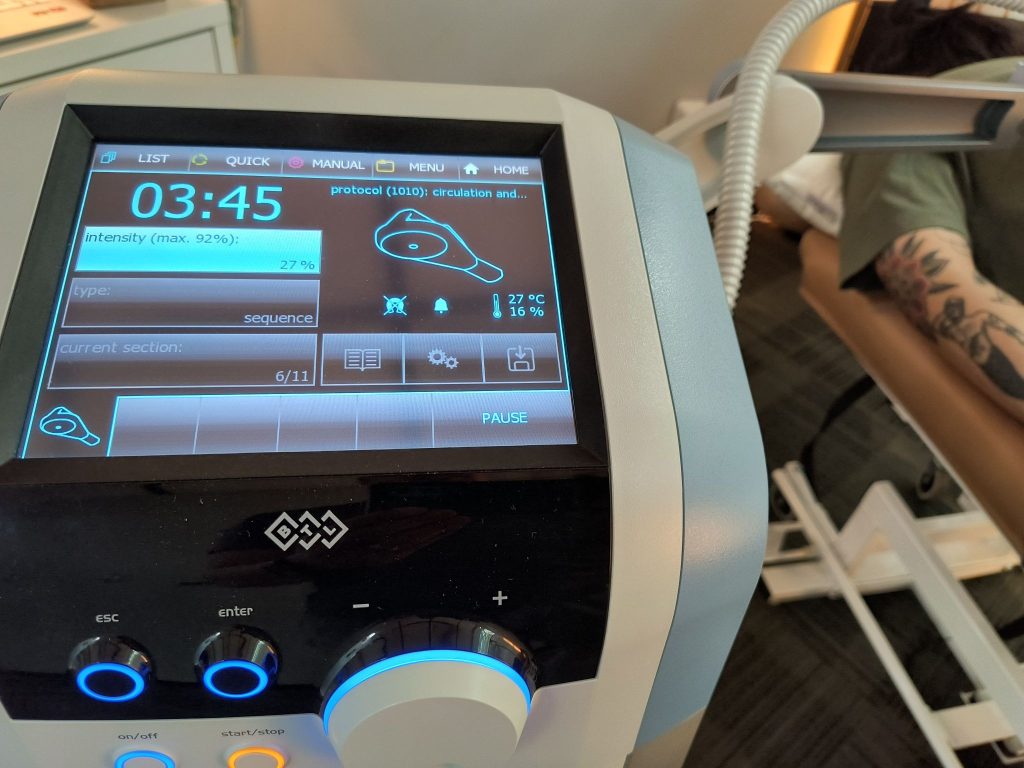
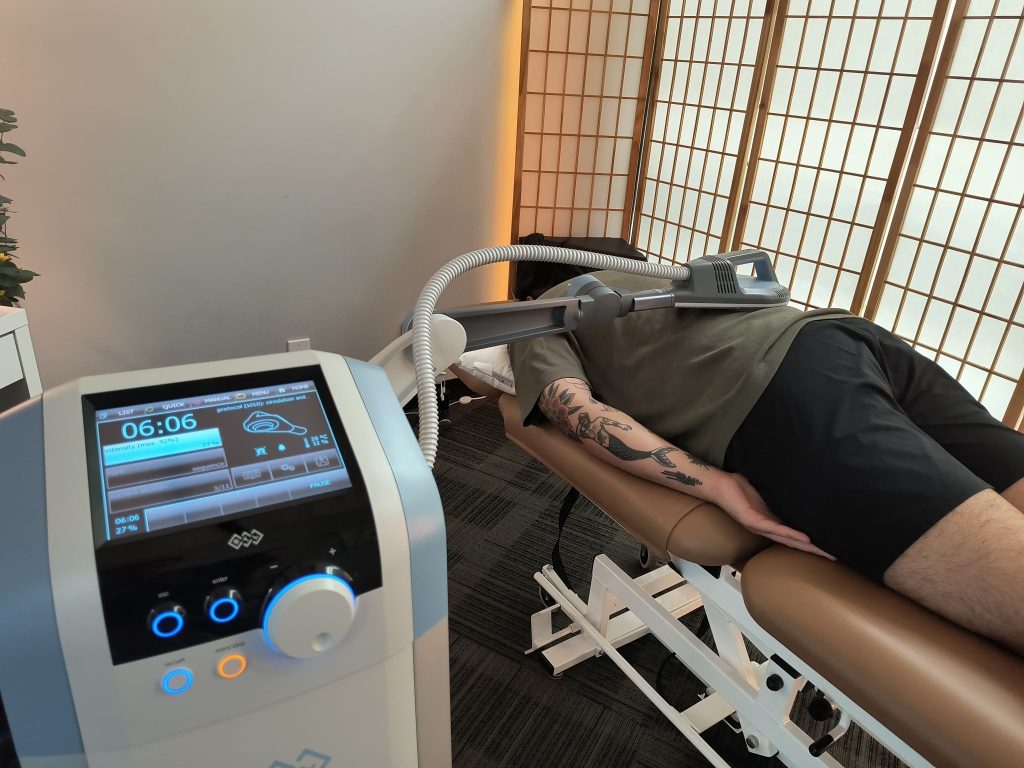
The Super Inductive System, also known as SIS, is a device that delivers high-intensity electromagnetic fields to a targeted area of your body. It’s non-invasive, meaning nothing breaks the skin. In fact, this can be done through clothing and the device may not even need to make contact with your body. You don’t feel pain during this type of treatment. What you typically feel is a deep, rhythmic muscle contraction in the area being treated, along with a mild tingling sensation.
A session usually lasts about 10 to 15 minutes, depending on your condition and your Physiotherapist’s recommendation. The applicator hovers over the painful area, and the electromagnetic pulses penetrate deep into the tissue. This is different from a TENS unit, which works on the skin’s surface via electrodes. SIS can reach into deeper structures like muscles, nerves, bones, and joints.
The technology behind it falls into a category called repetitive peripheral magnetic stimulation, or rPMS. It’s related to pulsed electromagnetic field therapy (PEMF), which has been studied for decades, but SIS operates at much higher intensities. That distinction matters when we look at the research.
What Does the Research Say?
Here’s where it gets interesting. A growing body of clinical trials has looked at whether high-intensity electromagnetic stimulation actually reduces chronic low back pain, or whether it’s just another gadget that feels good at the moment.
Pain reduction is well supported
A 2023 clinical trial published in the Journal of Rehabilitation Medicine tested high-energy pulsed electromagnetic therapy against a sham treatment in 61 patients with non-specific back pain. After three sessions, the treatment group reported a pain reduction more than twice as large as the sham group. The difference was statistically significant, meaning it was very unlikely to be explained by chance or placebo effect alone.
Two separate reviews that pooled results from multiple studies found similar patterns. A 2023 review combining six trials found meaningful reductions in both pain and disability scores. A broader 2025 review covering eight trials confirmed the pain-relief finding across several types of chronic musculoskeletal pain, including low back pain specifically.
A larger review from 2022 that looked at 14 trials and over 600 patients found that PEMF significantly reduced pain in chronic low back pain patients, though interestingly, the benefit was less clear for acute (short-term) back pain. This suggests the therapy may be particularly suited to people whose pain has been hanging around for a while (aka Chronic pain), which is exactly the group that tends to feel the most stuck.
It may work through the brain, not just the muscles
One of the more fascinating findings comes from a 2026 study of 181 patients that used brain imaging to understand how electromagnetic stimulation actually works. Researchers found that a single session not only reduced pain scores but also changed activity in a region of the brain called the dorsolateral prefrontal cortex, an area involved in how we process and regulate pain. The patients who showed the biggest changes in brain activity were the same ones who reported the most pain relief.
This matters because chronic pain isn’t just about tissue damage. Over time, the nervous system can become sensitized, essentially turning up the volume on pain signals even after the original injury has healed. If electromagnetic therapy can help turn that volume back down, it offers something that stretching and strengthening alone might not.
It pairs well with exercise and physiotherapy
A smaller but important study from 2017 combined electromagnetic stimulation with targeted core muscle training in patients with chronic low back pain. The combination group showed improvements in pain, muscle activation, and disability that lasted at least a month after treatment ended. The patients who started with the weakest muscle activation patterns benefited the most.
A 2024 comparative study found similar results: patients who received electromagnetic therapy alongside standard physiotherapy had significantly lower pain and disability scores than those who received physiotherapy alone.
This lines up with how we use SIS at our clinic. It should not be a standalone fix. We use it as one layer within a full treatment plan that includes hands-on manual therapy, progressive exercise, and education about movement habits.
What the Research Doesn’t Yet Tell Us
We want to be upfront about the limits. Most of the studies so far have involved relatively small groups of patients. The evidence quality, when formally graded, ranges from low to moderate. Long-term follow-up beyond a few weeks is limited, with only one study tracking results out to a month.
There are also no head-to-head comparisons yet between SIS and well-established treatments like structured exercise programs or cognitive behavioural therapy for pain. And no major clinical guideline currently lists electromagnetic stimulation as a first-line recommendation for chronic low back pain.
That said, the direction of the evidence is consistent. Across multiple trials and reviews, the treatment group does better than the control group for pain. That’s a meaningful signal, even if the body of research is still growing. In our experience at EastWest Physiotherapy Burnaby, many of our clients who reported months and years of chronic low back pain experienced positive changes to their pain and function when treatments are paired with SIS.
What a Session Looks Like at Our Clinic
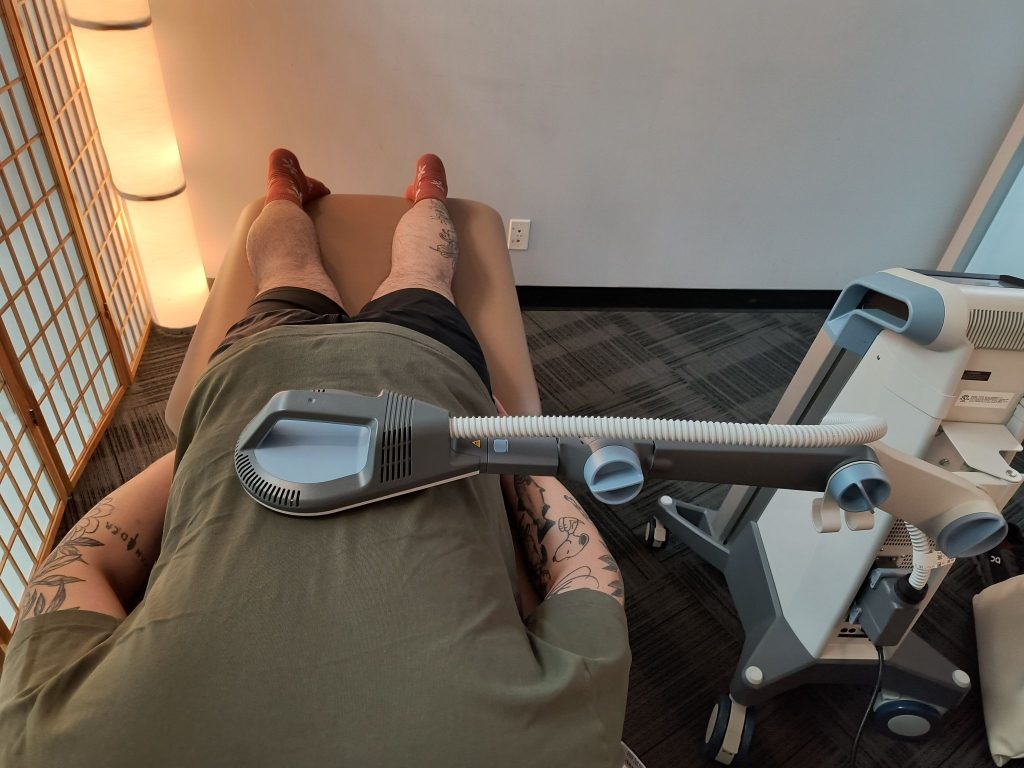
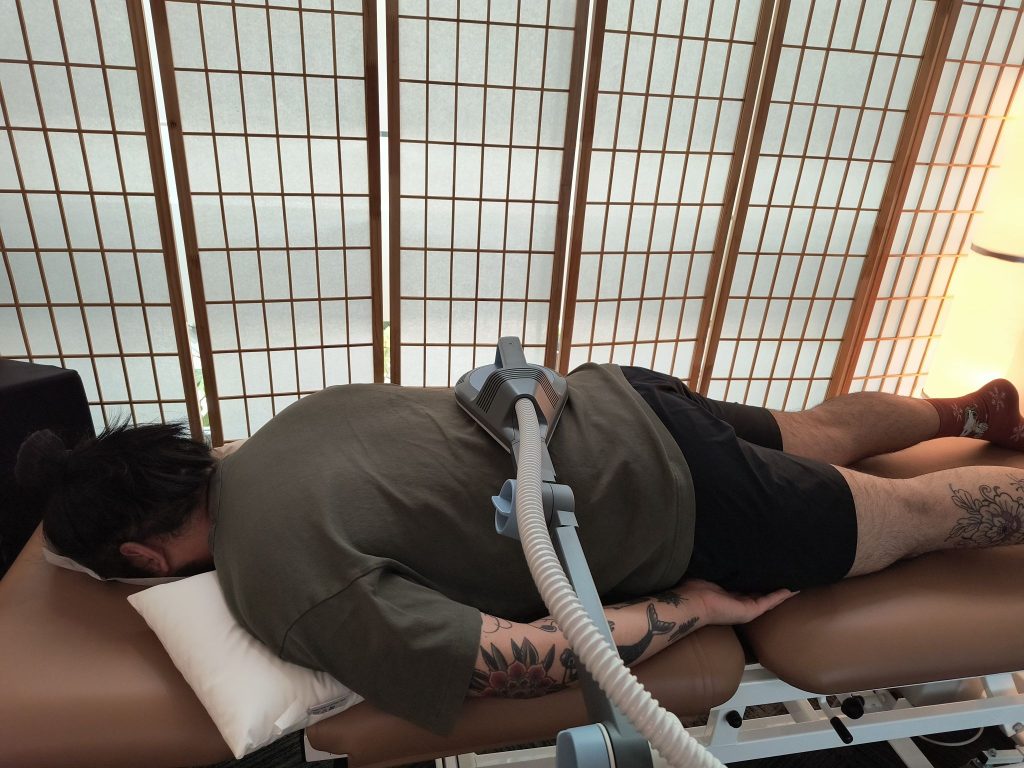
When you schedule a Physiotherapy Session with Advanced Modality – Super Inductive System session for your Physiotherapy visit, here’s what to expect. Your physiotherapist positions the applicator over your lower back. You stay fully clothed. The treatment starts at a comfortable intensity and is adjusted based on your feedback. Most patients describe the sensation as a strong but painless pulsing or tapping deep in the muscles. Your therapist will guide the applicator to the region of the lower back where you experience the most discomfort.
A typical course involves four to eight sessions, usually two to three times per week, built into your regular physiotherapy visits. We track your pain levels and functional progress along the way to make sure it’s actually helping.
Is It Right for You?
Research into using SIS tends to support patients who have had low back pain for more than three months, have plateaued with exercise and manual therapy alone, and are looking for a non-invasive option to help break through that plateau. It’s also worth considering if you’ve been told your pain is “non-specific,” meaning imaging hasn’t found a clear structural cause. That’s actually the population where the strongest evidence exists.
It’s not appropriate for everyone. Patients with pacemakers, implanted electronic devices, metal in the area of treatment, or who are pregnant should not receive this treatment. Your physiotherapist will screen for these before recommending it.
Frequently Asked Questions
Does SIS treatment hurt?
No. Most patients feel deep muscle contractions and a mild tingling, but the treatment is not painful. Your physiotherapist adjusts the intensity to keep it comfortable. You should notice an immediate difference in pain levels, mobility and relaxation after your treatment.
How many sessions will I need?
Most patients benefit from four to eight sessions over two to four weeks, alongside with their regular physiotherapy program. Your therapist will reassess as treatment progresses.
Can SIS replace physiotherapy?
No. The research shows the best results when electromagnetic therapy is combined with exercise and hands-on treatment. We use SIS as one part of a complete plan, not as a replacement.
Is SIS covered by my insurance?
SIS is delivered as part of your physiotherapy session, so it falls under your physiotherapy coverage. If you have extended health benefits that cover physiotherapy, your SIS treatment is included. We offer direct billing to most major insurers. The cost to include SIS treatment per 40 minute session is $150, 1 hour session is $200.
What’s the difference between SIS and a TENS machine?
TENS sends small electrical currents through electrode pads on the skin to block pain signals at the surface. SIS uses high-intensity electromagnetic fields that penetrate much deeper, reaching muscles, nerves, and joints without any skin contact and can be done through clothing. The mechanisms and depth of treatment are quite different.
Dealing With Chronic Low Back Pain in Burnaby?
If your back pain has been dragging on and you’re not seeing progress with what you’ve tried so far, it might be time to look at what else is available. Our team can assess whether the Super Inductive System makes sense as part of your recovery plan.
EastWest Physiotherapy Burnaby 4388 Still Creek Dr Unit 201, Burnaby, BC V5C 6C6 Phone: (604) 398-2936