
Burnaby Physiotherapy Techniques
Therapeutic Taping In Burnaby, BC
Techniques
Therapeutic Taping in Burnaby – EastWest Physiotherapy
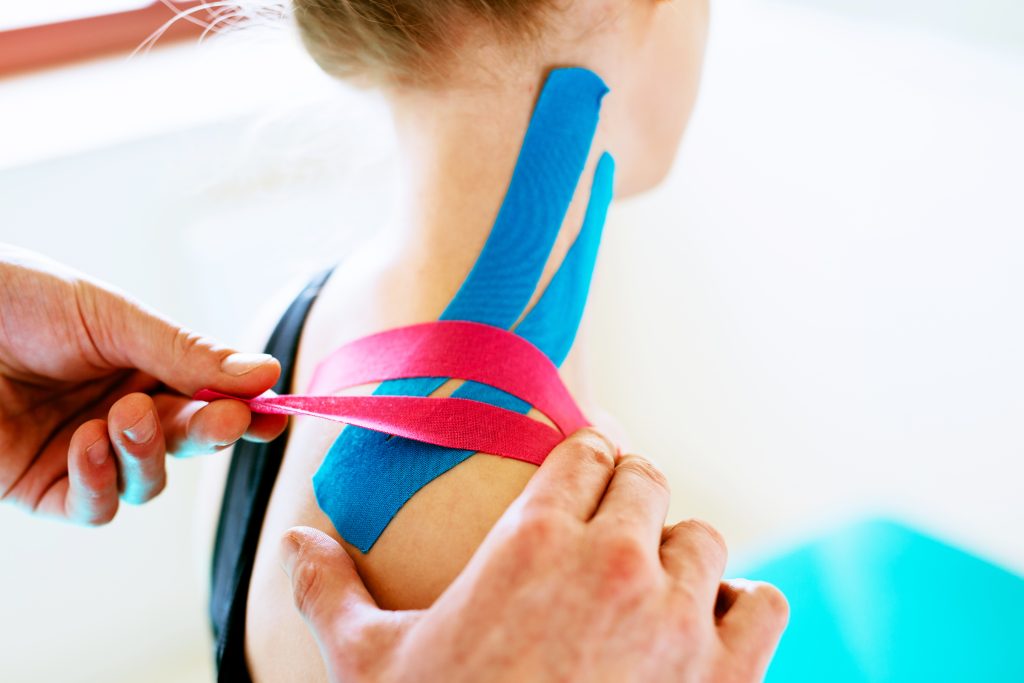
Therapeutic taping is frequently used by physiotherapists to improve movement, stabilize joints, decrease swelling, and prevent re-injury. Depending on your condition and goals, different types of tape and taping techniques can be used to support healing and enhance performance.
At EastWest Physiotherapy in Burnaby, taping may form part of your treatment plan to help you move with more confidence, ease pain and support your body during daily activities or sport.
What Is Therapeutic Taping?
Therapeutic taping involves applying specialized tape to the skin to assist muscle function, support joints, improve circulation, or provide sensory feedback. The choice of tape and technique depends on whether the goal is to limit movement, promote movement, reduce swelling, or improve posture.
Our Burnaby Physiotherapists primarily use two categories of tape:
Stiff Tape
Stiff tape, such as athletic tape and Leuko P tape, does not stretch. It is used to:
- Limit excessive motion
- Stabilize joints
- Improve posture
- Support structures during sport or strenuous activity
Elastic Tape (Kinesiology Tape)
Elastic tape, such as Kinesio Tape, KT Tape, RockTape and Leuko K Tape, stretches with your skin. It is used to:
- Promote proper movement
- Reduce swelling and inflammation
- Improve circulation
- Provide sensory feedback to activate or relax muscles
- Support full range of motion
When Stiff Tape may be used?
Stiff tape is ideal when joint stability or movement restriction is required.
Common Uses:
- Preventing ankle sprains: Athletic tape can be applied to stop the ankle from rolling in.
- Posture correction: Many office workers benefit from posture taping to guide the body away from slouching and reduce neck, shoulder, and upper back pain.
- Patellofemoral tracking or knee pain: Taping can help maintain the kneecap’s proper alignment during bending and straightening.
Stiff tape offers immediate structural support and is especially helpful for athletes, people with joint instability, or those recovering from acute injuries.
When Elastic (Kinesiology) Tape may be used?
Elastic tape is chosen when maintaining full range of motion is important. Developed in the 1970s, kinesiology tape is designed to mimic the elasticity of skin while lifting the outer layer of tissue to create space underneath.
Tape can be cut into an “I,” “Y,” or circular strip depending on the structure and desired effect.
Your physiotherapist may use kinesiology tape for:
- Swelling and edema
- Muscle strains
- Tendon irritation
- Postural support
- Sports injuries
- Enhancing proprioception and movement control
Is This Technique A Long Term Solution?
While effective, taping is considered a temporary tool—a stepping stone toward long-term recovery. Long-term results require proper strengthening, stretching, and mobility to allow the body to move pain-free.
What Conditions Can Therapeutic Taping Help?
Taping may be appropriate for:
- Ankle sprains and instability
- Knee pain and patellar tracking issues
- Shoulder pain and rotator cuff irritation
- Low back and neck pain
- Posture-related discomfort
- Muscle strains
- Swelling and bruising
- Joint hyper mobility
- Sports injury prevention
Your Physiotherapist will determine whether taping is beneficial during your assessment.
What to Expect During Your Taping Session
Your physiotherapist will start by assessing the affected area, including how you move, how stable your joints are and what activities you need support for. Based on that assessment, they will choose the type of tape and technique that suits your condition and explain why.
They will then apply the tape and check how it feels as you move. Before you leave, they will explain how long to keep it on, how to remove it safely and what signs of skin irritation to look out for. They will also explain how taping fits into the rest of your rehabilitation plan.
If it’s appropriate, your physiotherapist may show you simple taping techniques you can use at home between visits.
How Long Does Therapeutic Tape Stay On?
As a general rule, keep the tape on as directed if it helps reduce pain or improve function. If it increases discomfort, remove it straight away and gently wash the area with soap and water.
How long tape can stay on depends on the type of tape, how it was applied, your activity level and how sensitive your skin is. Your physiotherapist will give you specific instructions, but typical guidelines are:
White Athletic Tape (Stiff Tape):
- Remove immediately after your activity
- Leaving it on too long may irritate the skin
Stiff Tape for Joint Alignment/Posture:
- Can stay on 3–4 days, or until it naturally begins to peel
- Remove sooner if skin irritation occurs
Elastic (Kinesiology) Tape:
- Usually stays on 2–3 days
- Will naturally start to peel off
- Safe to remove earlier if uncomfortable
Why Choose EastWest Physiotherapy for Therapeutic Taping?
- One-to-one sessions in private treatment rooms
- Physiotherapists trained in advanced taping techniques
- Customized taping strategies based on sport, work activity, or injury
- Integration with manual therapy, exercise therapy, acupuncture, or IMS
- Supportive approach to posture, joint stability, and injury prevention
- Convenient North Burnaby location near Brentwood, Willingdon Park, and Highway 1
- English, Cantonese, and Mandarin spoken
Frequently Asked Questions
Can taping replace a brace?
Sometimes. Taping can mimic the support of a brace and may help determine whether a brace is needed long-term.
Can you exercise or shower with kinesiology tape on?
Yes. Most kinesiology tapes are designed to stay in place through exercise, sweating and showering, although how well they hold depends on the product, how the tape was applied and how active you are. After showering, pat the tape dry rather than rubbing it. If it causes itching, irritation or discomfort, remove it. Your physiotherapist can tell you how long to keep it on.
Does taping hurt?
No. You may feel slight tension on the skin, but it should never be painful.
Is taping a long-term solution?
No. Taping is designed to assist healing, prevent re-injury, and guide movement while your body recovers.
What Is the difference between kinesiology tape and athletic tape?
Kinesiology tape is elastic and moves with your body, so you keep your range of motion during everyday activities and exercise. Athletic tape is rigid and is used to limit movement or add support around a joint. Your physiotherapist can recommend the right tape based on your injury, symptoms and rehabilitation goals.
Can I apply kinesiology tape myself, or should a physiotherapist apply it?
You can apply kinesiology tape yourself, but the right placement and tension depend on the area being treated and what the tape needs to do. A physiotherapist can assess whether taping suits your condition and show you how to apply it correctly, so it supports the rest of your treatment and rehabilitation plan.
Book Your One-to-One Physiotherapy Session
Interested in how taping can support your recovery or performance?
Book your private physiotherapy session at EastWest Physiotherapy in Burnaby today.