
By Elizabeth Ng, MPT, BHK (Exercise Science) Registered Physiotherapist · EastWest Physiotherapy
Waking up with numb, tingling hands is one of the most common complaints we hear from patients at our Burnaby physiotherapy clinic. The good news is that in the vast majority of cases, it comes down to one thing: the position your wrist falls into while you sleep.
In this blog, we’ll break down why hands go numb at night, what’s usually behind it, and how carpal tunnel treatment in Burnaby at EastWest Physiotherapy combines Western rehab techniques with Eastern methods to get you sleeping, and moving, pain-free again.
The Most Common Culprit: Carpal Tunnel Syndrome
The carpal tunnel is a narrow passageway on the palm side of your wrist, bordered by small wrist bones and a tough ligament. The median nerve runs through this tunnel on its way to your thumb, index, middle, and half of your ring finger. Because the tunnel is a fixed, tight space, anything that adds pressure inside it can squeeze the nerve.
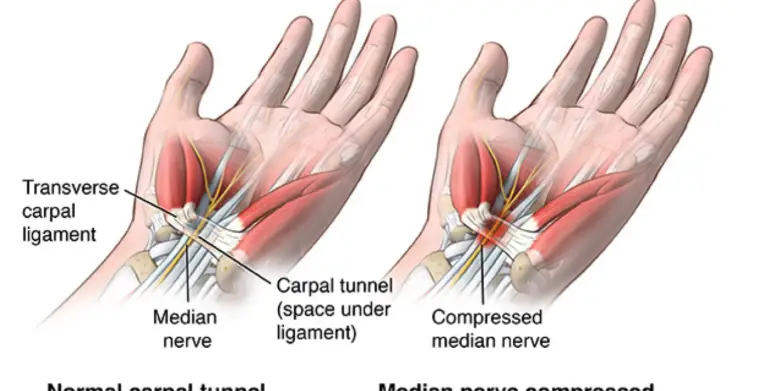
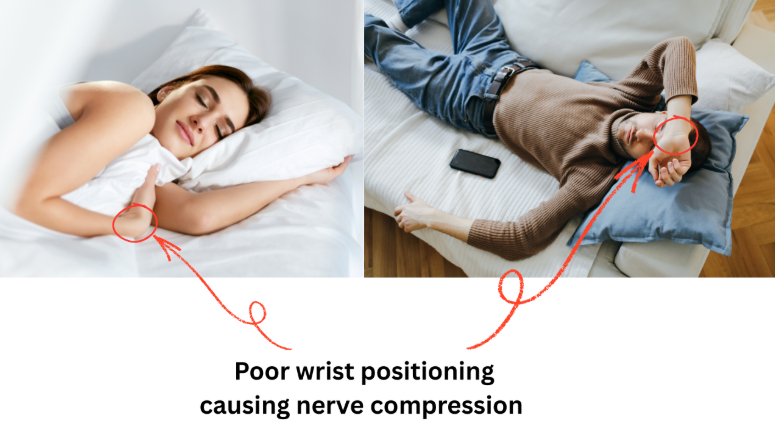
That’s exactly what tends to happen overnight. Most people naturally curl their wrists into a bent position while asleep, and unlike during the day, there’s no conscious effort to straighten back out. Held for hours, this bent posture can raise the pressure inside the carpal tunnel more than tenfold! This is enough to interfere with nerve function. The result is the numbness and tingling that wakes people up, often with quick relief once the hand is shaken out or repositioned.
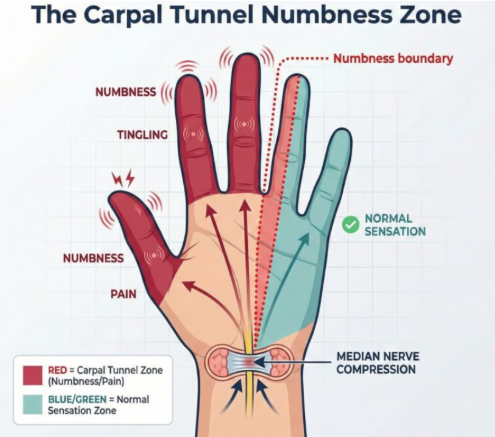
Carpal tunnel syndrome is the single most common cause of this pattern. It’s especially likely if the numbness is concentrated in the thumb, index, and middle fingers. It’s also more common in:
- Women
- People who are pregnant
- People living with diabetes or an underactive thyroid
- People carrying extra weight
- People doing repetitive hand work (typing, gardening, using vibrating tools)
Why It Happens Specifically at Night
A few things compound to make nighttime the peak time for symptoms:
- Wrist posture does the damage.
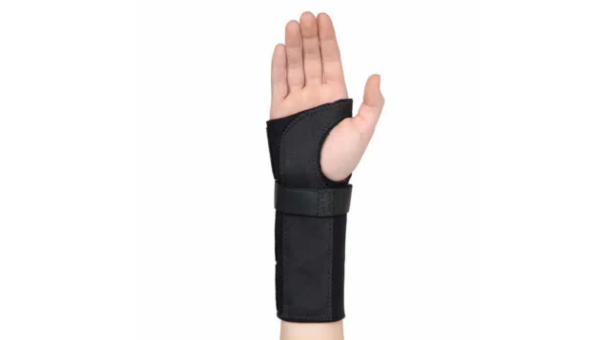
A bent wrist — curled forward or backward — narrows the tunnel and can push pressure inside it to levels that starve the nerve of blood flow. A straight, neutral wrist keeps pressure at its lowest, which is exactly why a night splint is such an effective first-line treatment.
- Finger position adds to it.
Curling the fingers while the hand rests can pull nearby tendons and muscle tissue further into the already crowded tunnel.
- Lying flat shifts fluid.
Being horizontal for hours, combined with less movement than during the day, allows fluid to pool around the nerve. This effect is amplified during pregnancy.
- It’s an ischemia problem, not a pinch.
The numbness isn’t from mechanical damage in the moment, it’s from the nerve’s blood supply being temporarily cut off. That’s why symptoms tend to come and go, and why they ease quickly once the wrist is repositioned.
Other Possible Causes, Ranked by How Common They Are
Carpal tunnel syndrome accounts for most cases, but it isn’t the only explanation for numb hands at night:
- Brief “dead arm” numbness
The everyday experience of a limb falling asleep from lying on it. This is arguably the single most frequent cause of nighttime numbness overall, but because it resolves in minutes and doesn’t recur in a set pattern, it’s rarely what brings someone in for an assessment.
- Peripheral neuropathy
Nerve damage that’s usually diffuse and affects both hands, often the feet first. Diabetes is the leading cause. This is more likely if the numbness is symmetrical and involves the feet as well as the hands, rather than being confined to specific fingers.
- Cervical radiculopathy
A pinched nerve in the neck (usually around the C6–C8 level) that refers numbness down the arm. Neck pain, and numbness that worsens when turning or tilting the head, point toward this rather than carpal tunnel syndrome.
- Cubital tunnel syndrome (ulnar nerve entrapment at the elbow)
The second most common nerve entrapment after carpal tunnel, but well behind it in frequency. It shows up as numbness in the ring and little fingers, often worse after sleeping with the elbow bent.
What Usually Helps First
For a classic carpal tunnel presentation where you have numbness in the thumb, index, and middle fingers that wakes you up at night, the two most important first steps are:
- Wearing a wrist splint while sleeping
- Keeping the wrist in a neutral (straight) position throughout the day and night
These are well-supported first steps and can often be started right away. If symptoms are severe, don’t fit the typical pattern, or don’t improve with splinting, a nerve conduction study (NCS/EMG) can help confirm the diagnosis. If neck pain or the warning signs above are present, imaging of the cervical spine may be a more appropriate next step.
How EastWest Physiotherapy Treats Numb Hands in Burnaby
Splinting alone helps many people, but it doesn’t address the muscle tension, poor circulation, or nerve irritation that often keep symptoms coming back. At EastWest Physiotherapy, we combine evidence-based Western rehabilitation with time-tested Eastern techniques to treat the whole picture.
Manual Therapy and Nerve Mobilization
Our physiotherapists use hands-on manual therapy to release tight forearm and wrist muscles that can add to the pressure inside the carpal tunnel. Gentle nerve gliding techniques help the median nerve move more freely through the tunnel, which can ease tingling and improve grip strength over time.
Therapeutic Exercises and Positioning
We teach specific wrist and tendon-gliding exercises to reduce pressure in the tunnel and improve circulation, along with practical guidance on how to position your wrist and arm while you sleep and work. Small changes to keyboard height, mouse position, or your pillow setup can make a meaningful difference.
Eastern Techniques: Acupuncture and Cupping
This is where our EastWest approach sets us apart. Acupuncture can help calm an irritated nerve and improve local blood flow, while cupping therapy can release deep tension in the forearm muscles that often accompanies carpal tunnel symptoms. Many patients find this combination speeds up relief compared to exercise or splinting alone.
IMS and Electrotherapy
For patients with tight, knotted forearm muscles contributing to nerve compression, IMS (Intramuscular Stimulation) can release trigger points that manual therapy alone may not reach. Electrotherapy modalities can also be used to reduce pain and inflammation around the wrist.
Splinting and Ergonomic Support
We can advise on proper splint fit and positioning, and help identify daytime habits – from how you sleep to how you type, that may be keeping your symptoms active.
When to See a Physiotherapist for Numb Hands
You don’t need to wait until the pain is severe to get it checked out. It’s worth booking an assessment if:
- Numbness wakes you up regularly, not just occasionally
- Symptoms are spreading to your whole hand or into your forearm
- You’re noticing weakness or dropping things
- Numbness involves both hands and your feet (a sign it may not be carpal tunnel)
- You also have neck pain that seems connected to the numbness
A physiotherapist can help identify which of these patterns fits your symptoms and build a treatment plan around it, rather than guessing.
Finding Relief for Numb Hands in Burnaby
Numb, tingling hands at night are common, but they’re not something you have to live with. Whether the cause is a straightforward case of carpal tunnel syndrome or something else entirely, an accurate assessment is the fastest way to the right treatment.
Our Burnaby physiotherapy team will explain what’s going on in plain language, answer your questions, and build a treatment plan tailored to you – whether that includes manual therapy, acupuncture, IMS, splinting, or a combination of all four.
Your Recovery Starts Here
Don’t wait for numbness to disrupt another night’s sleep. Our experienced physiotherapists are here to help you move better, feel stronger, and get back to doing what you love.
Book your appointment now and take the first step toward recovery.
Frequently Asked Questions
Is numbness in my hands at night always carpal tunnel syndrome? Not always, but it’s the most common cause, especially when numbness is concentrated in the thumb, index, and middle fingers. Numbness that involves both hands and feet, or that comes with neck pain, may point to a different cause, such as peripheral neuropathy or a pinched nerve in the neck.
What’s the best sleeping position to avoid numb hands? Keeping your wrist as straight and neutral as possible is key. Avoid sleeping with your hands tucked under a pillow or your body, since this encourages the bent wrist position that raises pressure in the carpal tunnel. A night splint can help maintain this position automatically.
Can acupuncture actually help with carpal tunnel symptoms? Many patients find acupuncture helpful for reducing pain and improving circulation around an irritated nerve. At EastWest Physiotherapy, we typically combine it with manual therapy and targeted exercises rather than using it alone, since addressing muscle tension and nerve mobility together tends to produce better results.
How long does it take to notice improvement? This varies by patient and severity, but many people notice reduced nighttime symptoms within a few weeks of consistent splinting combined with physiotherapy treatment. More significant nerve involvement can take longer and may need further investigation.
When should I stop trying home remedies and see someone? If splinting and wrist positioning haven’t improved things after a couple of weeks, or if you’re noticing weakness, numbness spreading, or symptoms in both hands and feet, it’s time for a proper assessment.
This information is for general education and isn’t a substitute for an individual medical evaluation. If you’re experiencing persistent or worsening numbness, please book an assessment with one of our Registered Physiotherapists.

About Elizabeth Ng, MPT, BHK
Elizabeth has been a Registered Physiotherapist since 2008, with a Master of Physical Therapy from UBC. She’s certified through the Acupuncture Foundation of Canada Institute and in Integrative Systemic Dry Needling (ISDN), and holds a Certificate of Orthopedic Manual Therapy from Manual Concepts in Perth, Australia. Elizabeth blends Western physiotherapy with acupuncture and Traditional Chinese healing techniques to treat the root cause of pain, and has a special interest in working with recreational runners.