
By Mike Wong, Physiotherapist, MScPT, BHK | Physiotherapy in Burnaby, BC
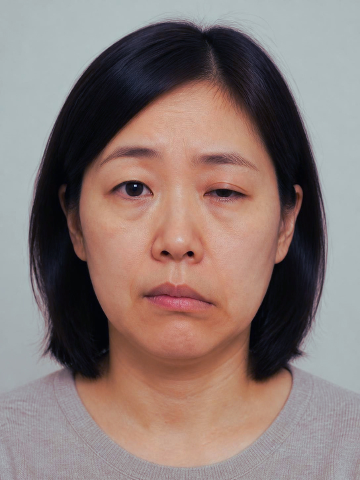
You wake up one morning and look in the mirror. Surprisingly, you noticed that one side of your face is not working properly. Your smile is crooked and eyes cannot close up all the way, and the cup of water that you are drinking leaks out of your mouth.
Your first thought is that you may be suffering from a stroke.
After checking with your doctor, you were diagnosed with Bell’s palsy. The good news is that most people recover well. But recovery isn’t always quick, and it isn’t always complete. The care you get in the first days and weeks matters.
At EastWest Physiotherapy in Burnaby, we work alongside your doctor to support facial nerve recovery using acupuncture, gentle facial retraining, hands-on therapy and education. Here’s what Bell’s palsy is, what actually helps, and what we can do for you.
What Is Bell’s Palsy?
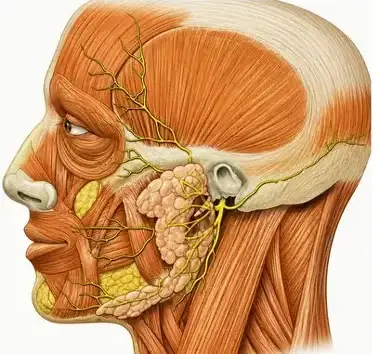
Bell’s palsy is a sudden weakness or paralysis of the muscles on one side of the face. It happens when the facial nerve, the nerve that controls your facial expressions, becomes irritated and swollen.
That nerve travels through a narrow bony tunnel in your skull. When it swells inside that tight space, it gets squeezed. The signals to your facial muscles get interrupted.
Some common signs include:
- Drooping on one side of the face
- Trouble closing one eye, or an eye that feels dry and gritty
- A crooked or lopsided smile
- Drooling, or trouble drinking from a cup
- Pain behind or around the ear
- Sounds feeling too loud in one ear
- Changes in taste
- Reduced tearing or drooling of tears
Symptoms usually occur quickly, often over a few hours to two days. Weakness normally peaks within 72 hours of the first sign.
An important note is that Bell’s palsy affects the whole side of the face, including the forehead. If you can still wrinkle your forehead but the lower face is weak, or if you also have arm or leg weakness, slurred speech, confusion or vision changes, it is an emergency situation. Those can be signs of a stroke. Always get a proper medical diagnosis with a medical professional before assuming it’s Bell’s palsy.
What Causes Bell’s Palsy? (Etiology of Bell’s Palsy)
Bell’s palsy is idiopathic, which means no single cause is proven. Some potential causes can be explained:
Viral reactivation. The leading theory is that a dormant virus, most often herpes simplex type 1, sometimes varicella-zoster (the chickenpox virus), wakes up and inflames the facial nerve. The swelling compresses the nerve inside its bony canal.
Swelling in a tight space. Because the nerve has nowhere to expand, pressure builds. That pressure blocks nerve signals. In milder cases the nerve covering is bruised but intact, and recovery is fast. In more severe cases nerve fibres are damaged and must regrow, which takes much longer.
Risk factors that appear more often in people who develop Bell’s palsy include pregnancy (especially the third trimester and the week after delivery), diabetes, high blood pressure, obesity, upper respiratory infections, and a family history of facial palsy.
Other causes must be ruled out. Lyme disease, shingles affecting the ear (Ramsay Hunt syndrome), middle ear infections, tumours, trauma and certain neurological conditions can all cause facial weakness. This is why a medical assessment comes first before finalizing the diagnosis as Bell’s Palsy.
The First 72 Hours Matter Most
See a doctor right away. Oral corticosteroids like prednisolone are started within 72 hours of your first symptoms are the strongest evidence-based treatment for Bell’s palsy in adults. They reduce nerve swelling, shorten recovery time and improve the chance of a full recovery. The American Academy of Neurology rates this as their highest level of evidence.
Antiviral medication is sometimes added, especially for severe cases, though on its own it doesn’t appear to help much.
Protect your eye. If your eye won’t close fully, it can dry out and get scratched. This is the complication that can cause permanent damage. Your doctor or pharmacist can guide you on lubricating drops, ointment at night, and taping or patching the eye while you sleep. Sunglasses outdoors help too.
Physiotherapy, acupuncture and facial retraining are complementary care. They support recovery. They don’t replace medication or eye protection.
How Physiotherapy Helps Bell’s Palsy Recovery
Once the medical side is taken care of, physiotherapy focuses on what happens to your face over the following weeks and months.
The goal isn’t just to get movement back, but getting good quality movement back. Treatment also helps to reduce the risk of long-term problems like synkinesis, where the nerve regrows into the wrong muscles and your eye closes every time you smile.
1. Assessment
We start by measuring where you are. We check each facial muscle group, assess your eye closure, and look at the neck and jaw. This gives us a baseline so you can actually see your progress instead of guessing.
We also screen for red flags and will refer you back to your physician, to neurology or to ENT when that’s the right call, particularly if paralysis is complete, or if there’s been no meaningful change by around three months.
2. Acupuncture
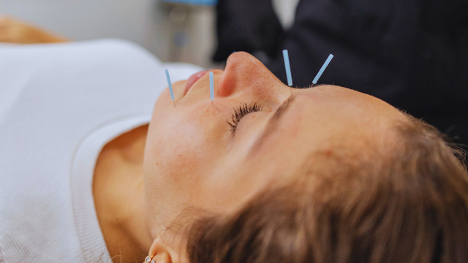
Acupuncture is widely used for facial palsy, and it’s a core part of what we offer at our Burnaby clinic.
Several reviews of clinical trials report better recovery rates and shorter recovery times when acupuncture is added to standard medical care, with one 2025 analysis finding recovery about 10 days faster on average. A matched study also found that starting acupuncture within the first week was linked to better outcomes at 12 weeks.
However, the studies are small and not high quality. The American Academy of Otolaryngology reviewed the evidence and made no recommendation either for or against acupuncture — not because it failed, but because the research isn’t strong enough to be certain. In our experience at EastWest Physiotherapy, we have definitely noticed improvements in our clients’ facial movements and function with body and facial acupuncture, sometimes evident in even just one session.
Acupuncture is a safe treatment, with possible mild side effects like brief bruising or soreness in roughly 7 to 15 percent of treatments.
Some Acupuncture points we may use for facial palsy:
Depending on our assessment, client’s comfort level, and stage of recovery, we may choose various points that can stimulate the nerves that are affected.
Local facial points:
- Dicang (ST4) — corner of the mouth
- Jiache (ST6) — jaw/cheek, over the masseter
- Xiaguan (ST7) — in front of the ear
- Sibai (ST2) — below the eye
- Yangbai (GB14) — above the eyebrow, for forehead and brow lift
- Cuanzhu (BL2) — inner eyebrow
- Yuyao (EX-HN4) — mid-eyebrow
- Quanliao (SI18) — cheekbone
- Yingxiang (LI20) — beside the nostril
- Chengjiang (CV24) — below the lower lip
- Qianzheng (EX-HN16) — in front of the earlobe
- Yifeng (TE17) — behind the earlobe, near the facial nerve trunk
Distal and regional points:
- Hegu (LI4) — hand, usually needled on both sides
- Fengchi (GB20) — base of the skull
- Shuigou (GV26) — above the upper lip
Technique is adjusted to your stage and your comfort level. In the early, acutely inflamed phase we may use distal body acupuncture points alongside a few facial points. As you move into the recovery phase we may use more local facial points and may introduce electroacupuncture, which can enhance treatment effectiveness. Treatment is typically a course of sessions rather than a one-off, and we reassess as treatment progresses.
3. Therapeutic Ultrasound
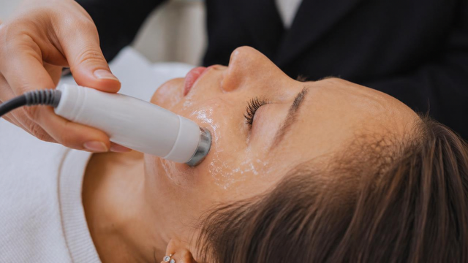
We may use low-intensity therapeutic ultrasound over the affected side of the face and around the ear. It’s a comfortable, non-invasive treatment that delivers sound waves into the tissue to encourage blood circulation and reduce discomfort in the area.
The research on ultrasound specifically for Bell’s palsy is limited, and it isn’t the centrepiece of your program. We use it as a supportive adjunct alongside acupuncture and retraining, and we’ll tell you if it isn’t adding anything for you.
4. Facial Neuromuscular Retraining
This is one of the most important things physiotherapy brings.
More effort is not better. Hard, forceful, repetitive facial exercises like grimacing, big exaggerated smiles, and chewing gum all day, can actually increase the risk of synkinesis and unwanted co-movements. We see people who have been told to “exercise the face hard” and have made things messier.
Instead, we teach:
- Small, precise, low-effort movements. Quality over quantity. Isolating one muscle group at a time.
- Soft tissue work and self-massage for the face, jaw and neck, to keep tissue mobile and reduce tightness on the strong side.
- Stretching of the unaffected side, which often becomes overactive and pulls the face further out of balance.
- Relaxation and downtraining for anyone developing tightness or synkinesis later in recovery.
- Practical function: eating, drinking, speech clarity, and eye care habits.
- Acupressure and TENS care: to supplement the treatment received in the clinic.
- Education on what to expect, so you’re not panicking at week six.
We also address the neck, jaw and ear region, which often carry tension and discomfort during a facial palsy episode.
What Recovery Usually Looks Like
Most people with Bell’s palsy recover well. Around 70 percent of people with complete paralysis recover fully without treatment, and that figure rises to roughly 94 percent with steroids started early.
- Mild to moderate weakness: improvement often begins within 2 to 3 weeks, with recovery over 1 to 2 months.
- Severe or complete paralysis: recovery is slower, often 3 to 6 months, and sometimes longer.
- Incomplete recovery happens in a minority of cases, most often after complete paralysis.
Factors linked to slower or incomplete recovery include complete paralysis at the start, older age, diabetes, and delayed rehabilitation. One study found that people who started rehabilitation within 60 days had far better facial outcomes than those who started later.
That’s the practical takeaway: don’t wait it out alone. Get assessed early, treat promptly, even if your symptoms are mild.
My own mother experienced Bell’s Palsy a few years ago and through almost daily acupuncture sessions and treatment for 2 weeks, she recovered her facial movements completely.
Why Choose EastWest Physiotherapy in Burnaby
Bell’s palsy is not something every clinic sees regularly. Facial neuromuscular retraining along with acupuncture is a specific skill set and knowing how to grade technique to the stage of nerve recovery is extremely important
At our Still Creek Drive clinic, you’ll get:
- A thorough facial assessment, so progress is measurable
- Acupuncture delivered by trained practitioners, using point selections supported by the available research
- Facial retraining that protects against synkinesis instead of encouraging it
- Clear home program instructions you can actually follow
- Honest communication about what the evidence supports and what it doesn’t
- Coordination with your family doctor, neurologist or ENT as needed
We serve patients across Burnaby, including Brentwood, Willingdon Heights, Metrotown, Capitol Hill, Vancouver Heights and Hastings-Sunrise.
Frequently Asked Questions
Can physiotherapy cure Bell’s palsy? No treatment “cures” Bell’s palsy. The nerve heals on its own timeline. Physiotherapy can help support that process, helps you regain accurate movement, and reduces the risk of long-term complications like synkinesis and facial tightness.
When should I start physiotherapy for Bell’s palsy? See your doctor first, ideally within 72 hours, for steroids and eye protection. Physiotherapy can start early. Research suggests starting rehabilitation within the first weeks is linked to better outcomes than waiting months. In our experience, our clients that receive early intervention recover faster, with less sessions needed.
Does acupuncture for Bell’s palsy hurt? Facial needling uses very fine needles and most people find it far more comfortable than they expect. You may feel a brief pinch or a dull, achy sensation. Mild bruising is the most common side effect.
How many acupuncture sessions will I need? It varies. Research protocols for facial palsy often describe a course of treatments over several weeks rather than a single visit. We’ll reassess regularly and give you a realistic plan after your first appointment. Some of our clients have noticed an immediate change (facial relaxation, improved strength) after 1 session of acupuncture treatment.
Will Bell’s palsy come back? Recurrence is uncommon but possible, in roughly 5 to 10 percent of cases. If facial weakness returns, see your doctor promptly for reassessment.
Do I need a doctor’s referral to see a physiotherapist in BC? No. You can book directly with us. If you have extended health coverage, check whether your plan requires a referral for reimbursement.
Is it Bell’s palsy or a stroke? Bell’s palsy affects the forehead as well as the lower face. A stroke typically spares the forehead and often comes with other symptoms like limb weakness or speech changes. If you’re unsure, treat it as an emergency and call 911.
About the author:
Mike Wong, MScPT (University of Alberta), BHK (Exercise Science) (UBC) is a Physiotherapist in Burnaby, BC and specializes in Orthopedic Physiotherapy, Acupuncture, Dry Needling and has a special interest in traditional Eastern Medicine treatment techniques.
Book Your Bell’s Palsy Assessment in Burnaby
If you’re dealing with facial weakness, don’t wait and hope. Early assessment and treatment gives you the best chance at a full, high-quality recovery.
EastWest Physiotherapy Burnaby 4388 Still Creek Dr, Unit 201, Burnaby, BC
📞 604-398-2936 🗓️ Book online at eastwestphysiotherapy.janeapp.com