

Mike Wong, MScPT, BHK (Exercise Science), Registered Physiotherapist
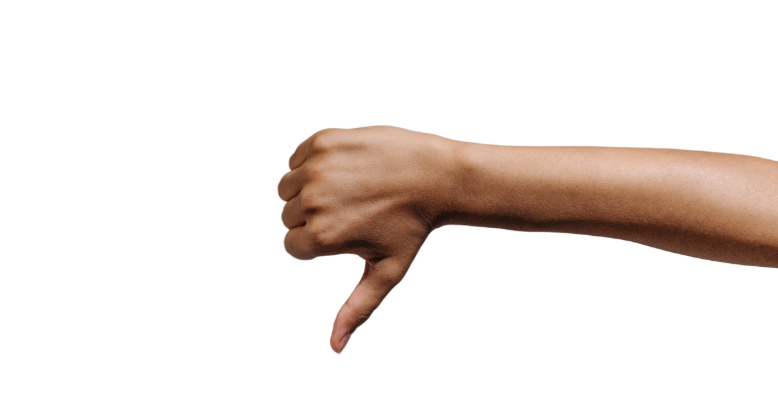
If you’ve been wincing every time you twist a jar lid, scoop up your toddler, or reach for your phone, you already know something’s off. The pain sits right along the thumb side of your wrist , sometimes a dull ache, sometimes a sharp catch that makes you drop what you’re holding. This pain can be from De Quervain’s tenosynovitis. It’s one of the more common wrist complaints we see at EastWest Physiotherapy in Burnaby, and the reassuring part is that it responds well to treatment once you know what’s actually going on. You can learn how to prevent it from getting worse and stop re-aggravating it.
What’s Actually Happening in Your Wrist
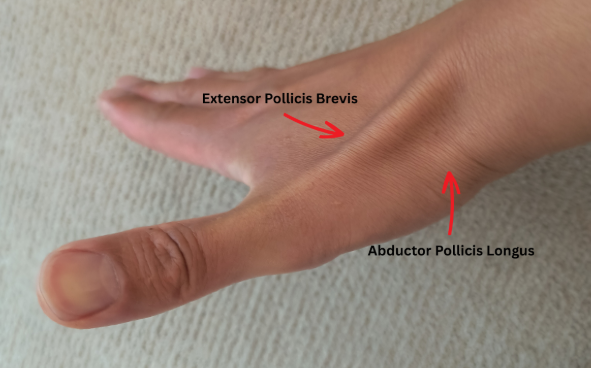
Two tendons, the abductor pollicis longus and extensor pollicis brevis, run side by side through a narrow tunnel on the thumb side of your wrist. Every time you move your thumb away from your hand, those two tendons slide back and forth through that tunnel.
Do that motion enough times, especially under load, and the tunnel starts to irritate the tendons gliding through it. The tissue thickens, the space gets tighter, and movement that used to be effortless starts to hurt. It’s less common to be hurt by a single movement and more like a repetitive use, the wrist equivalent of wearing a groove into a rope by running it over the same edge again and again.
Although we have seen new dads getting this condition, you’ll sometimes hear this condition called “mommy thumb” or “mother’s wrist,” because it shows up so often in new parents who spend weeks lifting a baby with their wrists bent and thumbs braced. Combined with a lack of sleep, rest and overuse, any parent can develop this condition. But also we treat this condition just as often in office workers, tradespeople, gardeners, and anyone whose hands are constantly on the go.
Signs You Might Be Dealing With De Quervain’s
The symptoms tend to creep in rather than announce themselves in one shot. What starts as mild soreness after a busy day can turn into pain that’s there most of the time. Watch for:
- Pain or tenderness right at the base of the thumb, on the thumb side of the wrist
- Swelling that makes the area look slightly puffy
- A catching, snapping, or grinding feeling when you move your thumb
- Weak or unreliable grip, especially with pinching
- Pain that flares with lifting, wringing, or repetitive phone use
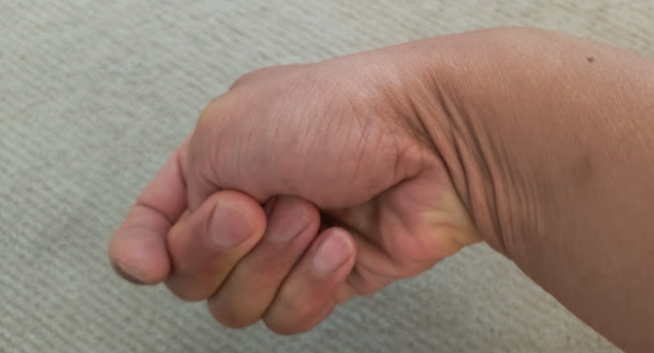
One of the clearest signs is what’s called the Finkelstein test. Tuck your thumb into your palm, close your fingers over it, then tilt your wrist toward your pinky finger. If that produces a sharp jolt of pain on the thumb side of your wrist, De Quervain’s is very likely the culprit. It’s one of the first things your physiotherapist will check during an assessment.
What Tends to Cause It
De Quervain’s is almost never the result of one bad moment, it’s an accumulation of repeated stress movements.
New parents, for reasons we covered above, are especially vulnerable.
Phone and computer use loads the same tendons every time you scroll, text, or grip a mouse for hours at a stretch.
Certain jobs like hairstyling, dental work, assembly line tasks, trades, healthcare, involve the same pinching and gripping motions dozens or hundreds of times a shift.
Hobbies and sports like gardening, golf, weightlifting, and racquet sports can push these tendons past what they’re conditioned to handle, particularly if you’ve recently increased how often or how hard you’re training.
The common thread across all of these activities is that the tendon isn’t given enough time to recover between bouts of use, so it slowly starts to break down.
Getting an Accurate Diagnosis in Burnaby
Most of the time, De Quervain’s can be diagnosed through a hands-on physiotherapy assessment without any imaging. At EastWest Physiotherapy, we’ll look at where your pain sits, how your thumb and wrist move, your grip strength, and whether the Finkelstein test reproduces your symptoms.
It matters to get this right, because a few other conditions can look similar on the surface, such as thumb arthritis, a wrist sprain, or nerve irritation. These require a different treatment approach. If we suspect something outside of tendon irritation, we’ll point you toward imaging or a conversation with your doctor before building a treatment plan.
How Physiotherapy Treats It
There’s no single fix that works for everyone, your plan will depend on how long you’ve had symptoms and what’s driving them. That said, most treatment plans draw on a few key pieces:
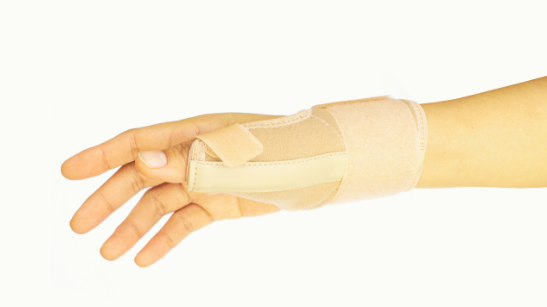
Splinting. A thumb spica splint limits the specific movement that keeps aggravating the tendons, giving the area a real chance to calm down. Most people wear it fairly consistently for the first few weeks, then wean off as things improve.
Manual therapy. Hands-on work such as joint mobilization, soft tissue release through the forearm, guided movement can help restore motion and eases tension building up around the irritated tendons.
Activity modification. This is the part people underestimate. Small changes such as lifting with a flatter hand instead of leaning on your thumb, adjusting how you hold your phone, building short breaks into repetitive tasks can often make a bigger difference than any single treatment technique.
Exercise Therapy. Once the acute pain settles, we build the tendon’s tolerance back up in stages starting with gentle range-of-motion work, moving into isometric holds, then light resistance band work, and finally reintroducing the activities that were giving you trouble in the first place. Rushing this stage is the most common reason people flare back up, so pacing really matters here.
Acupuncture. This form of treatment uses thin sterile needles on specific nerve points to increase circulation, decrease pain and improve healing to the thumb tendons.
Taping. Specific taping techniques can help support the tendon, minimizing stressful forces on it and preventing re-aggravation to the existing injury.
To speed up the process of healing, the Super Inductive System that utilizes high intensity electromagnetic fields to optimize cellular healing is an advanced therapy option we offer at our Burnaby clinic.
How Long Does It Take to Get Better?
It varies. If you’ve had symptoms for a couple of weeks and start treatment early, you may notice real improvement within four to eight weeks. If the pain has been building for months before you sought treatment, recovery can stretch to three to six months. The biggest factor within your control is simply not waiting, the longer an irritated tendon keeps getting loaded without support, the more it degenerates, and the longer it takes to settle down.
When to See a Physiotherapist

It’s worth booking an assessment if:
- Wrist or thumb pain has lasted more than a week or two
- The pain is getting worse rather than better
- Gripping, lifting, or carrying things has become genuinely difficult
- Pain keeps coming back even after you rest it
- It’s starting to interfere with work, parenting, or things you enjoy
Frequently Asked Questions
Can I still use my hand while I recover?
In most cases, yes, with some adjustments. Full rest rarely speeds things up and can leave the tendon weaker and stiffer. Your physiotherapist will help you figure out what’s safe to keep doing and what needs a short break.
Do I need a cortisone injection?
Sometimes, particularly if pain is severe enough to get in the way of rehab. But an injection on its own doesn’t fix the underlying tendon weakness or the movement habits that caused the problem. Physiotherapy alongside or after the injection gives you a better long-term result.
Will I need surgery?
Rarely. The large majority of cases improve with conservative care. Surgery only tends to come up after several months of appropriate treatment hasn’t resolved things. It is rare and we haven’t seen any of our patients needing to go this far.
Is this the same as carpal tunnel syndrome?
No. Carpal tunnel involves the median nerve and usually causes numbness or tingling. De Quervain’s involves the tendons on the thumb side of the wrist and shows up as pain with movement and gripping. The two can occur together, but they’re treated differently.
Does EastWest Physiotherapy bill ICBC or WorkSafeBC directly?
Yes. If your thumb or wrist pain is related to a motor vehicle accident or a workplace injury, give us a call at (604) 398-2936 and we can walk you through coverage.
Ready to Deal With It Instead of Working Around It?
If lifting, gripping, or even scrolling your phone has become something you plan around because of thumb pain, it’s worth getting it looked at. Most people are surprised how much relief comes from a properly built treatment plan rather than just waiting it out.
Book online at eastwestphysiotherapy.janeapp.com or call us at (604) 398-2936.
EastWest Physiotherapy | 4388 Still Creek Dr Unit 201, Burnaby, BC V5C 6C6